Beginning with Cross-platform mobile development with React Native, the narrative unfolds in a compelling and distinctive manner, drawing readers into a story that promises to be both engaging and uniquely memorable.
Exploring the world of mobile computing and software development, this guide delves into the exciting realm of creating mobile apps using React Native.
Introduction to Cross-platform Mobile Development with React Native
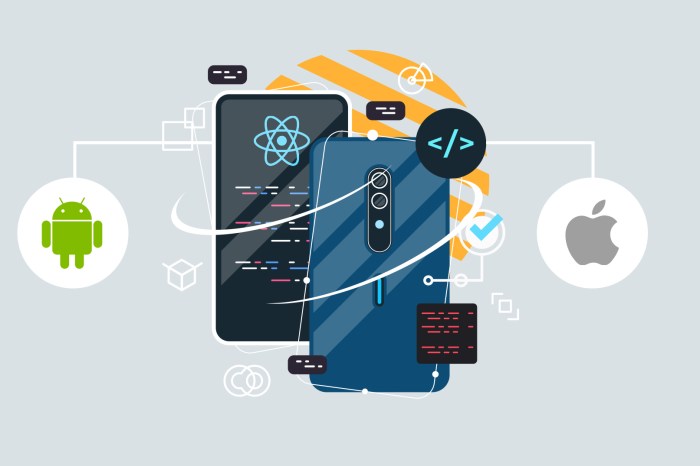
Cross-platform mobile development refers to the practice of creating mobile applications that can run on multiple operating systems, such as iOS and Android, using a single codebase. This approach allows developers to save time and resources by avoiding the need to write separate code for each platform.React Native is a popular framework for cross-platform mobile development created by Facebook.
It allows developers to build native mobile apps using JavaScript and React, a declarative and component-based library. React Native provides a bridge between JavaScript code and native components, enabling developers to create high-performance apps with a native look and feel.One of the key benefits of using React Native for mobile app development is its ability to streamline the development process.
By using a single codebase for multiple platforms, developers can save time and effort when building and maintaining their apps. Additionally, React Native offers hot reloading, which allows developers to see the changes they make to the code in real-time without having to restart the app.Overall, React Native provides a powerful and efficient solution for cross-platform mobile development, enabling developers to create high-quality apps for multiple platforms with ease.
Mobile Computing
Mobile computing refers to the use of mobile devices such as smartphones and tablets to access and interact with data and applications over a wireless network. In today’s tech landscape, mobile computing plays a crucial role in enabling users to stay connected, productive, and informed on the go.Compared to traditional computing, mobile computing offers the advantage of portability, allowing users to access information anytime, anywhere.
With the widespread adoption of smartphones and the availability of high-speed mobile networks, mobile computing has become an integral part of our daily lives.
Challenges and Opportunities in Mobile Computing
Mobile computing presents both challenges and opportunities for developers and businesses. One of the key challenges is the need to optimize applications for different operating systems and device types, as well as varying screen sizes and resolutions.On the other hand, mobile computing opens up opportunities for innovation and reaching a wider audience.
With the rise of mobile apps and mobile-friendly websites, businesses can engage with customers in new ways and provide personalized experiences based on location and user preferences.Overall, mobile computing continues to evolve rapidly, presenting new challenges and opportunities for developers to create innovative solutions that enhance user experiences on mobile devices.
Software Development for Mobile Platforms: Cross-platform Mobile Development With React Native
Mobile platforms present unique challenges and opportunities for software development. With the widespread use of smartphones and tablets, creating mobile apps has become essential for reaching a large audience. When developing software for mobile platforms, developers need to consider factors such as screen size, hardware limitations, and user interface design to ensure a seamless user experience.Native app development involves creating applications specifically for a single platform, such as iOS or Android.
While this approach allows for maximum performance and access to platform-specific features, it can be time-consuming and costly to develop separate apps for each platform. On the other hand, cross-platform development using frameworks like React Native allows developers to write code once and deploy it across multiple platforms.
This approach can save time and resources, making it easier to maintain and update apps for different operating systems.Hybrid apps combine elements of both native and web apps, allowing developers to build a single app that can run on multiple platforms.
By using web technologies like HTML, CSS, and JavaScript, hybrid apps can be deployed across different operating systems while still accessing device-specific features. This approach offers a balance between native performance and cross-platform compatibility, making it a popular choice for many developers.
Differences Between Native and Cross-Platform Development
- Native app development is platform-specific, while cross-platform development allows for code reuse across multiple platforms.
- Native apps offer maximum performance and access to platform-specific features, while cross-platform apps may have limitations in performance and feature availability.
- Cross-platform development can be more cost-effective and efficient for reaching a broader audience, but native development may provide a more tailored user experience.
Advantages of Hybrid Apps
- Hybrid apps can be deployed across multiple platforms with a single codebase, reducing development time and costs.
- Developers can leverage web technologies to build hybrid apps, making it easier to find skilled developers and resources.
- Hybrid apps can access device-specific features through plugins, providing a native-like experience for users.
Computer Hardware for Mobile Development
When it comes to mobile development, having the right computer hardware is essential for a seamless development process. The hardware components you use can greatly impact the performance of your mobile apps, as well as the efficiency of your development workflow.
In addition, emulators and simulators play a crucial role in testing mobile apps before they are deployed to actual devices.
Essential Hardware Components
Here are some essential hardware components required for mobile development:
- Processor: A fast processor is crucial for running development tools and emulators smoothly.
- RAM: Sufficient RAM is needed to handle multiple applications and processes simultaneously.
- Storage: SSD storage can help in faster read/write speeds and better performance.
- Graphics Card: While not as critical for mobile development, a dedicated graphics card can enhance performance for design and rendering tasks.
Impact of Hardware Specifications on Mobile App Performance, Cross-platform mobile development with React Native
The hardware specifications of your computer can significantly impact the performance of your mobile apps. A powerful processor and ample RAM can speed up compilation times, while a fast SSD can reduce loading times. Having a capable graphics card can also improve the rendering of graphics-intensive apps.
Role of Emulators and Simulators
Emulators and simulators are virtual environments that mimic the behavior of real devices, allowing developers to test their apps without the need for physical hardware. They help in identifying bugs, testing different screen sizes, and ensuring compatibility across various devices.
However, it’s important to note that emulators may not always replicate the exact performance of real devices, so testing on physical devices is still recommended for accurate results.
Epilogue
In conclusion, Cross-platform mobile development with React Native offers a versatile and efficient approach to building mobile apps, catering to a wide audience of users across different platforms.
Answers to Common Questions
What are the main benefits of using React Native for cross-platform mobile development?
React Native allows developers to write code once and deploy it across multiple platforms, saving time and resources.
How does mobile computing differ from traditional computing?
Mobile computing focuses on portable devices and wireless networks, enabling users to access information on the go.
What are the key considerations when developing software for mobile platforms?
Developers need to optimize user experience for smaller screens, touch interfaces, and limited resources on mobile devices.